Study in Germany
The Practical Playbook
A clear, structured guide to eligibility, admissions, costs, APS, visas, and what happens after graduation, built for planning, not hype.
Turn a long guide into your next three moves
Choose the options closest to your situation. The planner points you to the sections that matter first; it does not replace university or visa eligibility checks.
Validate academic fit, then compare public programs
Start with eligibility and subject alignment. Build a public-university shortlist, budget city-first and plan German alongside an English-taught program.
Study in Germany is Not a Shortcut. It’s a System.
Germany rewards planning, documentation, and academic role-fit.
Germany is globally attractive because it combines academic rigour, strong industry linkage, and a rules-based ecosystem that converts education into employability over time. However, outcomes depend on whether you understand the system: admission eligibility, program alignment, financial planning, and a realistic post-study job strategy.
The biggest mistake candidates make is treating Germany like a “single decision.” In reality, it is a sequence: selecting the right program → preparing documents → securing admission → financial proof → visa → integration → internships → full-time conversion.
This page is designed as a planning guide. It is structured to help you decide whether Study is the right entry route, and how to execute it with fewer surprises.

Strong study outcomes in Germany come from sequencing: the right program, the right city, credible finances, and an early employability plan.
Public vs private: understand trade-offs before you apply.
Documentation quality matters as much as your grades.
Blocked account + insurance are core, not optional.
Language is leverage: it multiplies internships and job conversion odds.
Strategic Insight
How to think about Germany as a study destination.
Choose a program that maps to hiring demand and internship pipelines, not just “what’s trending.”
Your city influences rent, part-time work options, and internship access. Plan it deliberately.
Budgeting is not “nice-to-have.” It is how your visa proof and survival plan are evaluated.
Even B1 materially improves everyday integration and job conversion beyond English-only bubbles.
Can You Actually Get Admitted?
Eligibility is about alignment, not motivation.
German universities evaluate eligibility using defined criteria: academic background, subject match, grades, prerequisites, and documentation. For many applicants, the limiting factor is not “talent”, it is subject compatibility and missing prerequisites.
Treat eligibility as a checklist. If your profile matches the program’s requirements and your documents are clean, the process becomes predictable. If not, you need an alternative route (bridging, a different program, or a different entry pathway). You may also choose to work with an educational consultant or authorised admission agent to validate program fit, shortlist universities, and manage the admission process, particularly where eligibility interpretation or documentation requirements are complex.
What universities verify
- Subject match: your prior education aligns with the target program.
- Prerequisites: credits in key subjects (math, CS, core modules, labs).
- Proof: transcripts, degree certificate, and official language test scores.
- Consistency: no gaps, mismatched dates, or unverifiable claims.
Tap each requirement as you verify it.
Public vs Private, English vs German
The “best” choice depends on eligibility, budget, and job conversion strategy.
Public universities are often low-tuition but can be selective, with strict subject match and documentation requirements. Private universities can offer faster admissions and structured support, but at higher tuition, so ROI must be evaluated carefully.
Language of instruction is only part of the story. Even with an English-taught program, internships, part-time jobs, and regional employers often become accessible faster when you build German to at least B1/B2 during your studies.
Decision criteria that matter
- Admission predictability: subject match + prerequisites determine outcomes.
- City economics: rent and living costs can exceed tuition differences.
- Internship access: proximity to employers and language readiness matter.
- Post-study plan: target role, CV, projects, and job search timeline.
What a strong “study profile” includes
Treat your education plan like a portfolio: evidence, clarity, and intent.
- Program shortlisting (8–15) based on eligibility and demand
- Academic documents (transcripts, modules, proof of prerequisites)
- SOP that explains subject fit + goals (not generic motivation)
- Language test readiness (English test + a German plan)
- Financial plan (blocked account + buffer + insurance)
Budget Like a Professional
Tuition is rarely the full story, living costs and compliance costs define reality.
Even when tuition is low, Germany has predictable recurring costs: rent, health insurance, semester contribution, transport, and living expenses. Visa planning may also require proof of funds via a blocked account.
Your budget should be built city-first. A lower-tuition option in a high-rent city can be more expensive overall than a slightly higher-tuition option in a more affordable region.

Housing
Usually the largest cost. Availability matters as much as price, plan early and diversify options.
Insurance
Health insurance is fundamental for enrollment and residence permit compliance.
Blocked Account
A proof-of-funds mechanism. Plan funding sources and monthly cash flow properly.
Semester Fees
Semester contribution often includes local transport and student services.
Build a buffer
Aim for a safety margin for deposits, initial setup, and unexpected housing timelines.
City first, not brand first
A “top city” is not always a top outcome. Affordability and internships often win.
Know the compliance costs
Insurance, proof of funds, and documentation translation/legalisation can add up.
Academic Verification
APS: Why Academic Verification Comes Before Everything Else
Before applications, admissions, or visas move forward, Germany first verifies one thing: whether your academic credentials can be trusted across the system. This is the role of the APS (Academic Evaluation Certificate).
APS is a mandatory academic verification process required by Germany for applicants from select countries. It ensures that degrees, transcripts, and institutions are authentic and recognised before universities and visa authorities act on them. Without APS, most study applications and student visa processes do not proceed, regardless of profile strength.
Germany verifies academic credibility once, centrally, so universities, embassies, and authorities can rely on the result. For students, that means more work upfront, but fewer downstream delays.
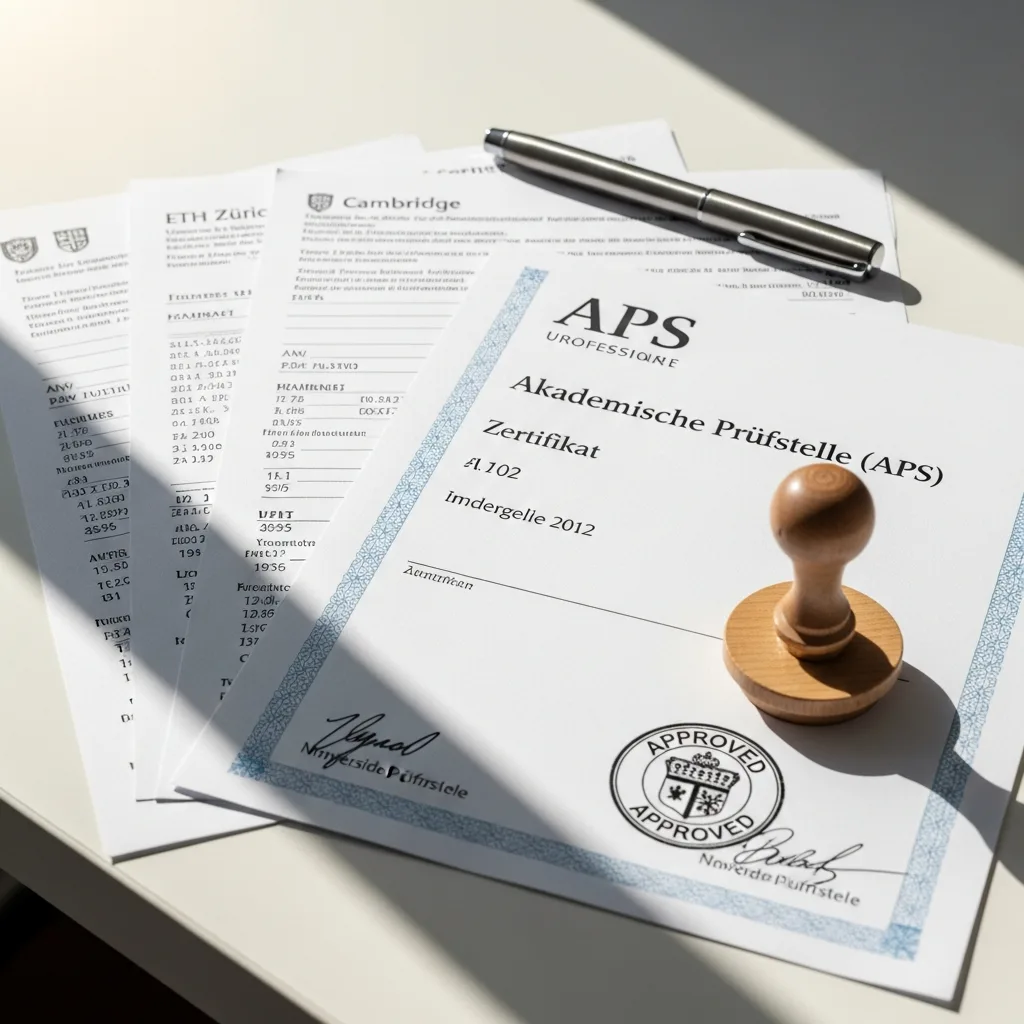
Why APS Matters for Students
APS is not an extra hurdle, it is the entry key to Germany's academic system. Completing it early reduces delays, prevents last-minute rejections, and allows universities and embassies to process applications with confidence. In short: no APS, no progress, but with APS done right, the rest of the system moves predictably.
Who Needs APS and When It Applies
APS is currently required for applicants educated in India, China, Vietnam, and other designated countries as specified by German missions. It typically applies to:
APS is usually required before or alongside university applications and before student visa submission.
APS Application: What You Need
- Passport and APS application form
- Fee proof and APS declaration
- School and degree certificates
- Semester-wise transcripts and institution proof
- Passport-size photographs
How the APS Process Works
- Apply via the official APS portal for your country.
- Upload required documents, pay the APS fee.
- Submit physical documents if requested.
- Attend verification if called.
- Receive the APS certificate (digital and/or physical).
Processing times vary, so early planning is essential.
What APS Verifies in Practice
- Authenticity of academic documents
- Recognition status of the issuing institution
- Consistency between qualifications and claimed study history
The goal is not evaluation of merit, but verification of legitimacy.
How to Apply Without Wasting Cycles
Process discipline beats last-minute panic.
Applications fail most often due to timing and documentation: missing prerequisites, incomplete module descriptions, weak SOPs, or deadlines missed. The best approach is to run applications like a pipeline.
Build a shortlist, map deadlines, assemble documents early, and standardise your package. Treat each application as a compliance pack: clear subject fit, evidence, and consistency.
Shortlist with logic
Split into: ambitious, realistic, and safe. Verify prerequisites program-by-program.
Standardise documents
One master pack, then program-specific tailoring (SOP, module mapping, CV emphasis).
Timing is a strategy
Work backwards from intake deadlines to language tests, SOP, and notarisation needs.
Your “Application Pack”
Keep it clean, consistent, and verifiable.
- CV (clean, academic + projects)
- SOP (subject fit + goals + why this program)
- Transcripts + degree certificate
- Language test score proof
- LORs (where required) + portfolio links
- Module mapping (if programs demand it)
Student Visa is a Compliance Process
You are evaluated for credibility, finances, and intent, not only admission.
Visa success depends on clarity and consistency: your admission, financial proof (often blocked account), insurance readiness, and a credible explanation of why this program makes sense for your profile and career trajectory.
The practical approach is to prepare a visa dossier: documents, financial flow, accommodation plan, and a clean story that matches your academic background. Avoid contradictions across SOP, interview, and financial source documentation.
Proof of Funds
Plan blocked account (where required), funding source traceability, and monthly cash flow for the first 3–6 months.
Insurance Readiness
Health insurance is not a formality. It is a core requirement for enrollment and residence permission.
Core Documents
- Admission letter + program details
- Academic records (clean + consistent)
- Language proof (as required)
Financial Proof
- Blocked account / proof of funds
- Source of funds evidence
- Cost breakdown (city-based)
Your Narrative
- Why this program + why now
- Career plan (internships + conversion)
- Return/settlement logic (honest, consistent)
How Student Status Quietly Reduces Your Cost of Living
In Germany, being a student is more than an academic label. It is a recognized economic category.
From transport networks to digital services, your status materially reduces monthly expenses, especially in your crucial first year.
Student Savings Simulator
Estimate your monthly savings versus a non-student resident in Germany.
Where Student Discounts Apply
Benefits are embedded into daily systems. Here is how they show up in practice.

Public Transport
The Semester Ticket can cover city or regional travel at a fraction of retail cost.
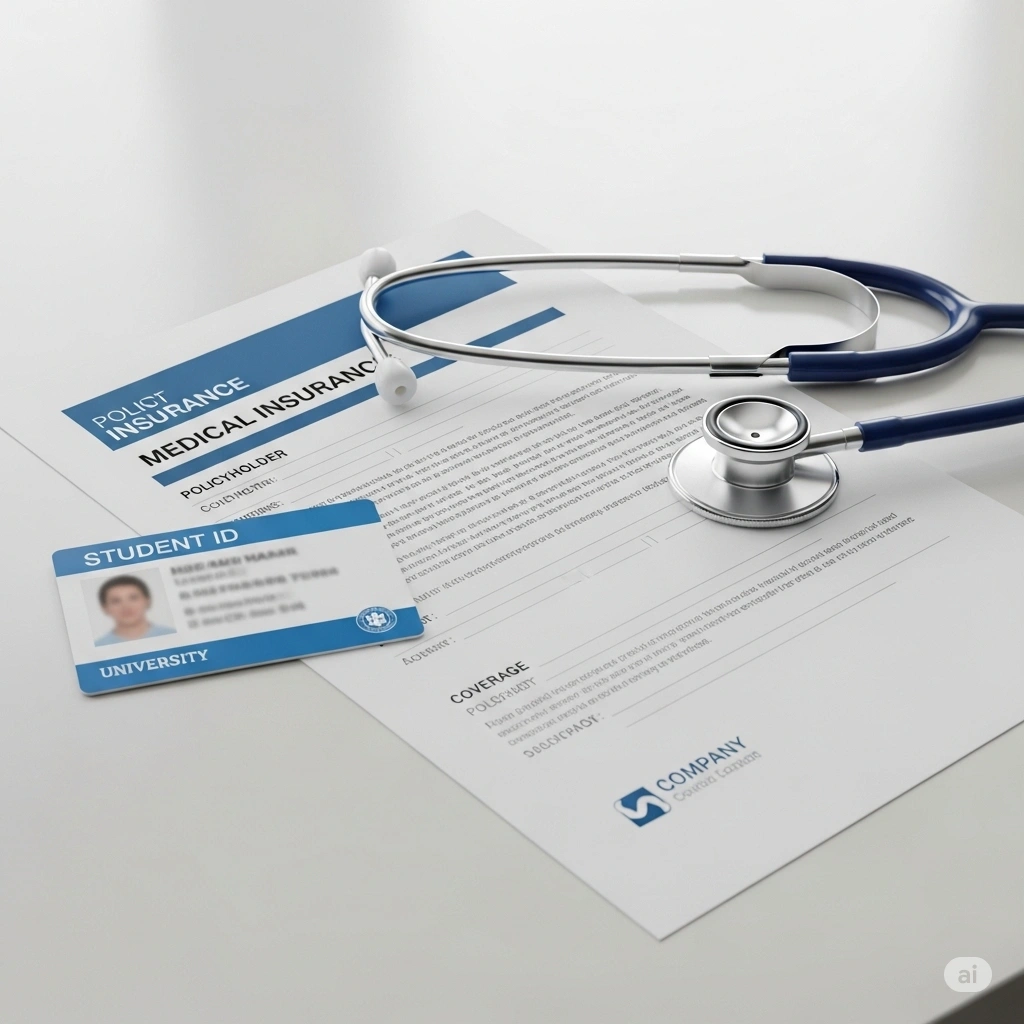
Health Insurance
Public insurers offer a student rate that sits below standard resident pricing.

Food and Dining
University canteens provide subsidized meals from EUR 2.50 to 4.50.

Housing and Utilities
Student dorms and youth tariffs reduce rent, internet, and mobile costs.

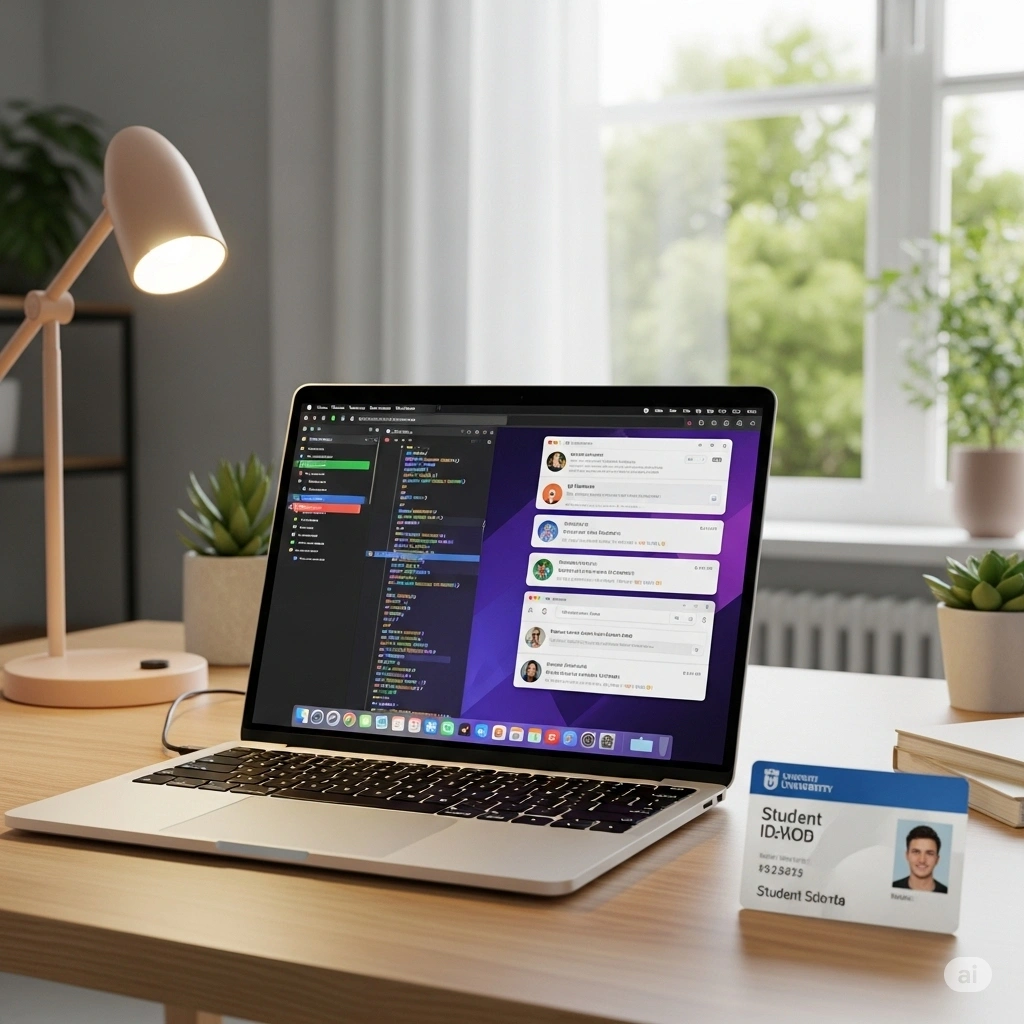
Digital Services
Office, Adobe, Spotify, and software subscriptions drop by 60 to 80 percent.
Travel and Leisure
Museums, cinemas, and regional travel offer student pricing or special days.
Verification Checklist
Discounts do not apply automatically. You need these keys to unlock them:
Student ID Card (Studierendenausweis)
Primary proof for on-site discounts.
Enrollment Certificate
Required for insurance and banking discounts.
University Email Address
Needed for edu discounts and software portals.
What Students Often Miss
Active Request Policy
Discounts rarely apply automatically. You must ask or select the student rate.
Regional Variability
Semester tickets vary by state, some cover whole regions, others only a city.
Age and Thresholds
Some discounts have a strict cutoff at 27 or 30 years old.
First Year Impact
Germany expects financial independence. Student discounts soften the landing while you navigate housing, banking, and part-time work.
"Student status in Germany is a practical financial advantage, not just an academic one."
Activate your status. Settle in faster. Spend less.
Internships, Job Conversion, and Long-Term Pathways
Your degree is the entry ticket. Conversion depends on employability execution.
The best outcomes happen when you plan internships early, build a German-ready CV, and invest in language and practical skills while studying.
Internship-First Strategy
Internships are the conversion engine. They reduce employer risk and increase your odds of a full-time offer after graduation.
Language as Leverage
Moving from A2→B1→B2 during your studies multiplies the employer universe, especially in regional markets and Mittelstand.
Conversion Checklist
Study in Germany: Execution Steps
A clean step-by-step plan you can actually follow.
Shortlist Programs
Eligibility + Demand Fit
- Identify subject match and prerequisites
- Build a 8–15 program shortlist
- Map deadlines and intake cycles
Output: a shortlist + a calendar, not random browsing.
Build Document Pack
Clean + Consistent
- SOP tailored to program fit
- Transcripts + module mapping (if needed)
- English test + German plan
Rule: no inconsistencies across dates, grades, titles, or claims.
Execute + Convert
Visa + Integration + Internships
- Finance plan (blocked account + buffer)
- Housing plan (multi-option strategy)
- Internship plan from early semesters
Goal: post-study job conversion, not just admission.
Frequently Asked Questions
Practical answers to the questions that decide outcomes.