Sprichst du Deutsch?
Language + Integration
In Germany, German is not a “nice to have.” It is access: to housing, healthcare, bureaucracy, community life, and workplace trust.
German Is a Systems Skill, Not a Hobby
In Germany, language reduces friction in every major system: housing, paperwork, healthcare, and employment.
Many people underestimate what “functioning German” means. It is not only vocabulary. It is the ability to understand structured conversations, follow written instructions, and communicate reliably under real-life pressure (phone calls, appointments, contracts, and official letters).
English can help in specific environments, some universities, research labs, multinational tech teams. But daily Germany still runs in German, especially in housing markets, city registration (Anmeldung), health insurance processes, and mid-skilled workplaces. The earlier you invest in German, the fewer bottlenecks you carry later.
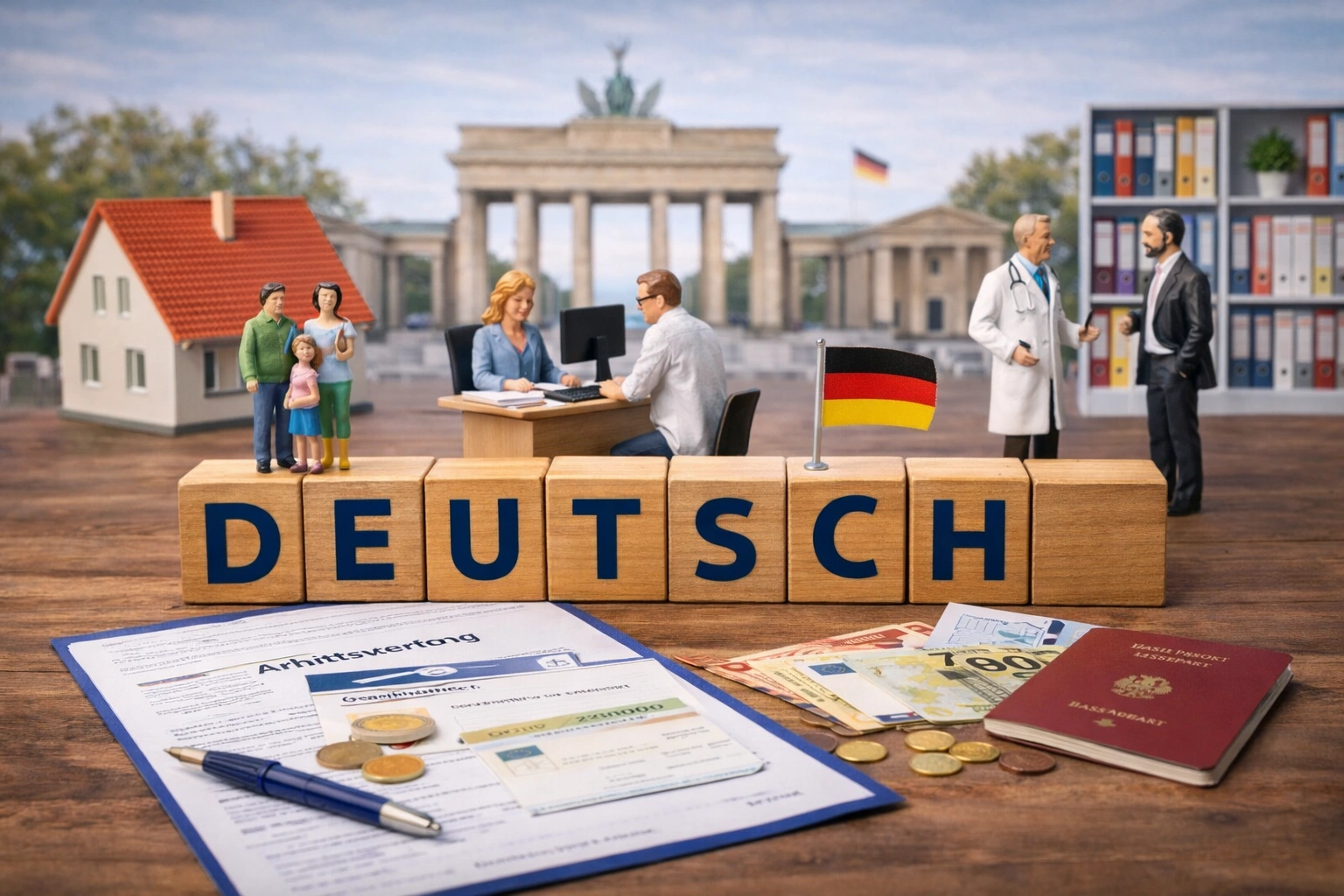
Housing & Contracts
Healthcare & Insurance
Bureaucracy & Forms
Workplace Trust
What A1–C1 Actually Means in Real Life
Level targets should be driven by your pathway: study, Ausbildung, skilled work, or regulated professions.
A1–A2: Survival and onboarding
A1–A2 helps you navigate predictable conversations: shopping, transport, basic introductions. It is useful early, but it often breaks under “admin pressure” (phone calls, letters, appointment bookings).
- Good for: daily basics, simple directions, basic workplace greetings.
- Still hard: landlord calls, appointments, official letters, complex customer/service interactions.
- Common trap: feeling confident in class but struggling in real speed German.
B1–B2: Independence and employability
B1 is where life becomes less dependent on others. B2 is where many employers start trusting that you can handle instructions, safety briefings, and day-to-day workplace communication.
- B1: manage appointments, basic problem-solving, clearer workplace interactions.
- B2: stronger interviews, better onboarding, fewer misunderstandings at work.
- Nuance: job-specific vocabulary and listening speed matter as much as “certificate level”.
C1: Professional fluency (select contexts)
C1 is not necessary for everyone, but it becomes a major advantage in roles requiring structured communication, complex documentation, or regulated interfaces. For some professionals, C1 changes the ceiling of your career progression.
High-trust roles
Client interaction, leadership tracks, complex coordination environments.
Written-heavy work
Reports, incident logs, compliance, documentation and stakeholder emails.
Advanced communication
Debates, nuanced feedback, conflict resolution, cross-team negotiation.
How to Learn German Without Losing Momentum
Most people stall due to inconsistent practice and weak speaking exposure, not because German is “too hard”.
A functional German plan has three loops: input you can understand, output you can repeat daily, and correction that upgrades your accuracy. This is what converts effort into progress.
Input
Graded listening + repetition until automatic.
Output
Speaking + writing daily, even imperfectly.
Correction
Feedback loop to remove repeated errors.
Daily Routine (60–90 mins)
- 15 min listening + shadowing (repeat aloud)
- 15–20 min phrase-based vocabulary (“chunks”, not single words)
- 10–15 min writing (6–8 sentences using repeatable structures)
- 15–30 min speaking (voice notes / tutor prompts / role-plays)
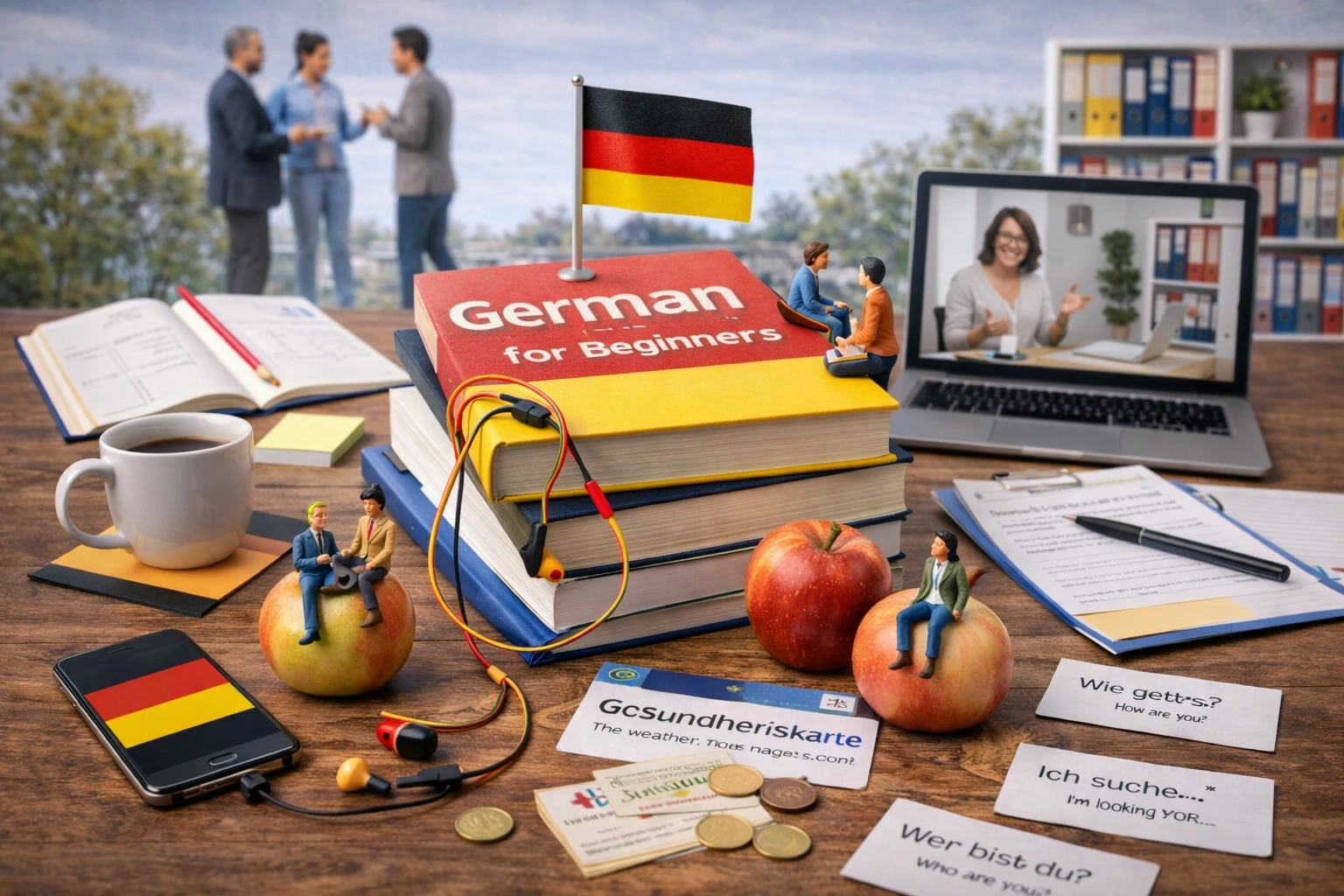
Admin German
Calls, appointments, letters, train these early.
Workplace German
Clarity + confirmations build employer trust.
Speaking German: The Real Bottleneck (And How to Fix It)
Speaking improves when you reduce fear, repeat useful patterns, and practice in real contexts.
Use “scripts” for real life
Germany has predictable conversations: appointment booking, landlord issues, internet billing, doctor visits, workplace instructions. Prepare short scripts and practice them until automatic.
- Make an appointment: request + time options + confirmation
- Explain a problem: what happened + since when + what you need
- Ask for repetition politely: “Können Sie das bitte wiederholen?”
- Confirm tasks: “Ich fasse kurz zusammen …” (summary reduces mistakes)
Create a speaking ecosystem
You don’t need daily long conversations. You need frequent short exposures that build confidence and speed. Attach speaking to routines, not motivation.
- Sprachcafé / language café: low-pressure, recurring practice
- Tandem partners: 2x/week short calls beats rare long sessions
- Voice notes: easiest daily output habit
- Workplace micro-speech: volunteer to do simple updates in German
Pronunciation: focus on being understood
You do not need a perfect accent. You need clear vowels, consistent rhythm, and confidence speaking slowly. Many learners speak too fast to “hide mistakes” and become harder to understand.
Slow down
German clarity improves when you pause and separate phrases.
Shadow audio
Repeat the same 30–60 seconds until your mouth learns the pattern.
Confirm understanding
Summaries and confirmations are culturally appreciated and reduce risk.
German Exams: Useful When You Use Them Correctly
Certificates help in structured systems, but your real performance (listening + speaking) still decides outcomes.
When exams matter
Exams can be essential for program entry, visa requirements in certain cases, or employer trust (especially when the employer cannot directly evaluate your German before arrival).
- Study pathway: university program language requirements vary; always check the program’s specific criteria.
- Ausbildung / mid-skilled roles: employers often prefer clear evidence (commonly B1/B2 depending on role).
- Healthcare/regulatory contexts: language proof and workplace communication standards tend to be stricter.
How to train for exams without becoming “test-only”
- Do timed listening + reading weekly (build speed tolerance)
- Write short texts regularly and get corrections (avoid fossilized errors)
- Practice speaking prompts with feedback (exam speaking is structured)
- Use real-life admin scripts alongside exam prep (Germany requires both)
Common misconceptions
-
“B2 certificate means I’m workplace-ready.”Not always. Workplace readiness depends heavily on listening speed + job vocabulary.
-
“I will learn German after I arrive.”Possible, but it increases stress. Early preparation improves housing, onboarding, and social stability.
-
“Perfect grammar is required.”Clarity and reliability matter more. Many successful professionals speak “simple, correct” German.
How to Integrate Into German Society (Practical, Not Performative)
Integration is built through repeated participation, especially via Vereine (clubs), volunteering, and local routines.
Vereine: Germany’s social operating system
Germany has a strong “club culture.” Joining a Verein is one of the fastest, most natural ways to meet people, practice German, and feel included. Social connection often develops slower than in some cultures, but once it forms, it tends to be stable.
Sports
Football, badminton, swimming, hiking groups, shared activity reduces social pressure.
Volunteering
Community work builds language and trust; you become “part of the place”.
Culture & hobbies
Choirs, music, photography, board games, consistent gatherings create familiarity.
Language meetups
Sprachcafé and Stammtisch formats are ideal for steady speaking exposure.
Diaspora associations: support, not a substitute
Associations that bring people from the same home country together can be extremely valuable early: emotional stability, practical tips, housing leads, and mentorship. The risk is isolation if they become your only circle.
- Use diaspora groups for stability, problem-solving, and trusted guidance.
- Use German environments for language growth and local integration.
- Create a weekly “German-only slot” (club/meetup/admin calls) to keep momentum.
Workplace German: How to Build Trust Faster
Employers notice reliability: clarity, punctuality, confirmations, and calm communication, more than fancy language.
What Germans typically value in communication
- Clarity: simple, correct sentences beat complex ones with errors.
- Confirmations: summarizing tasks reduces mistakes and builds trust.
- Punctuality: time discipline is not symbolic; it is operational.
- Professional tone: direct but respectful; avoid overpromising.
A “German for work” checklist you can practice
- Giving short updates: status, next step, ETA
- Asking for clarification without fear
- Reporting issues early (safety/quality mindset)
- Writing short emails: request → context → deadline → confirmation
Integration through work: a realistic timeline
Many newcomers feel socially “behind” in the first months. This is normal. Germany rewards steady participation: show up, do what you say, repeat routines, and relationships build gradually. Your goal is not instant belonging, it is stable belonging.
First 4–8 weeks
Focus on admin German: appointments, calls, and predictable scripts.
2–6 months
Join a Verein/meetup. Build recurring speaking exposure and confidence.
6–12 months
Move from “survival German” to “workplace German” with corrections and practice.
German Learning & Integration FAQs
Direct answers to practical blockers people face.