
Why Germany Attracts
Global Talent
A closer look at Germany’s economy, labour market, and long-term opportunity, beyond headlines and hype.
A Strong, Structured, and Resilient Economy
What makes Germany’s economy unusually stable for long-term careers.
Germany is the largest economy in the European Union and one of the world’s most export-oriented nations. Nearly half of its GDP comes from exports, meaning the country’s prosperity is deeply linked to global trade, supply chains, and industrial demand across Europe and beyond.
As part of the EU’s single market of 27 countries, Germany serves over 450 million consumers while hosting the European Central Bank (ECB) in Frankfurt, a role that places it at the financial and monetary core of Europe. This position anchors Germany as both a production engine and a stabilising force during economic cycles.
In practical terms, this structure filters directly into daily life. Companies plan cautiously, governments prioritise continuity, and systems are designed to minimise disruption rather than maximise speed. Economic decisions tend to be incremental, predictable, and rules-driven, whether in hiring, housing, or financial services.
Economic risk is spread across manufacturing, services, and industrial exports.
Growth is distributed across regions rather than concentrated in one city.
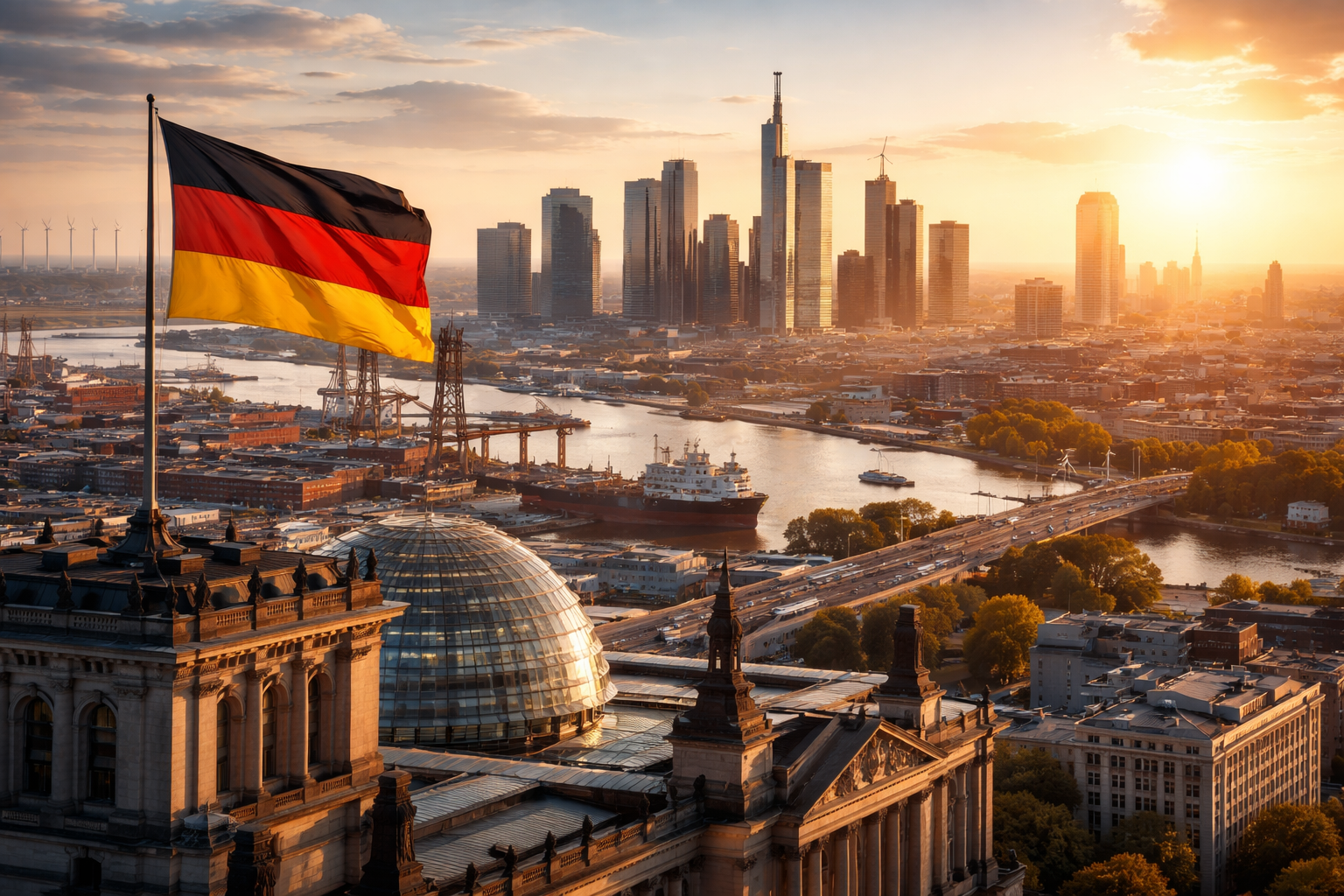
Germany prioritises economic stability and risk control over speed, shaping how institutions, employment, and daily systems operate.
Skills are treated as long-term infrastructure through vocational and academic training.
Labour institutions prioritise predictability in wages, benefits, and employment.
Strategic Insight
How to read Germany’s macro-economy and plan accordingly
Germany prioritises resilience over rapid expansion.
Systems are designed to minimise uncertainty upfront.
Processes favour consistency across the EU market.
Institutions are designed to endure economic cycles.
Why Germany Needs You
Understanding demand driven by demographics, skills, and long-term planning.
Germany’s demand for international talent is not a temporary “hiring wave.” It is the outcome of long-term demographic shifts, a rapidly evolving industrial base, and sustained demand across both high-skill and mid-skill occupations.
For candidates, this is an advantage only if you align with how Germany hires: formal qualifications, documented experience, language readiness, and role-specific compliance. When you match the system, Germany offers something rare, predictability.
What this means for you
- Opportunities exist across regions, not just a few “famous” cities.
- Hiring is structured: preparation beats volume applications.
- Language multiplies options and long-term stability.
- Clear pathways exist, from entry to settlement.
How Germany Actually Selects Candidates
Structured hiring rewards preparation, evidence, and role-fit, not high-volume applications.
German recruitment is designed to reduce risk. Employers evaluate your fit against the written job profile (Anforderungsprofil), and they expect consistency across your CV, certificates, references, and interview answers. When profiles are incomplete or unverified, candidates are filtered out early, often automatically.
Your goal is to make hiring “easy” for the employer: a German-ready CV (Lebenslauf), clear proof of qualifications, and a credible plan for language and relocation. This is especially critical outside large multinationals, where Mittelstand HR teams are smaller and documentation matters even more.
What employers check first
- Role alignment: do your last 2–3 years match the job description?
- Credentials: recognised degrees, training certificates, and proof of skills.
- Language trajectory: current level + measurable plan (A2→B1→B2/C1).
- Reliability signals: references, continuity, and clear motivation for Germany.
A high-success application pack
Treat your application as a compliance pack. The stronger the evidence, the faster the decision.
- 1-page summary + tabular CV (German format)
- Degree recognition / equivalence proof (where required)
- Portfolio / projects (IT, design, engineering)
- Certificates + reference letters (experience validation)
- Short motivation letter (role-fit + relocation readiness)
The Mittelstand Advantage
How Germany’s hidden champions create durable jobs across regions and industries.
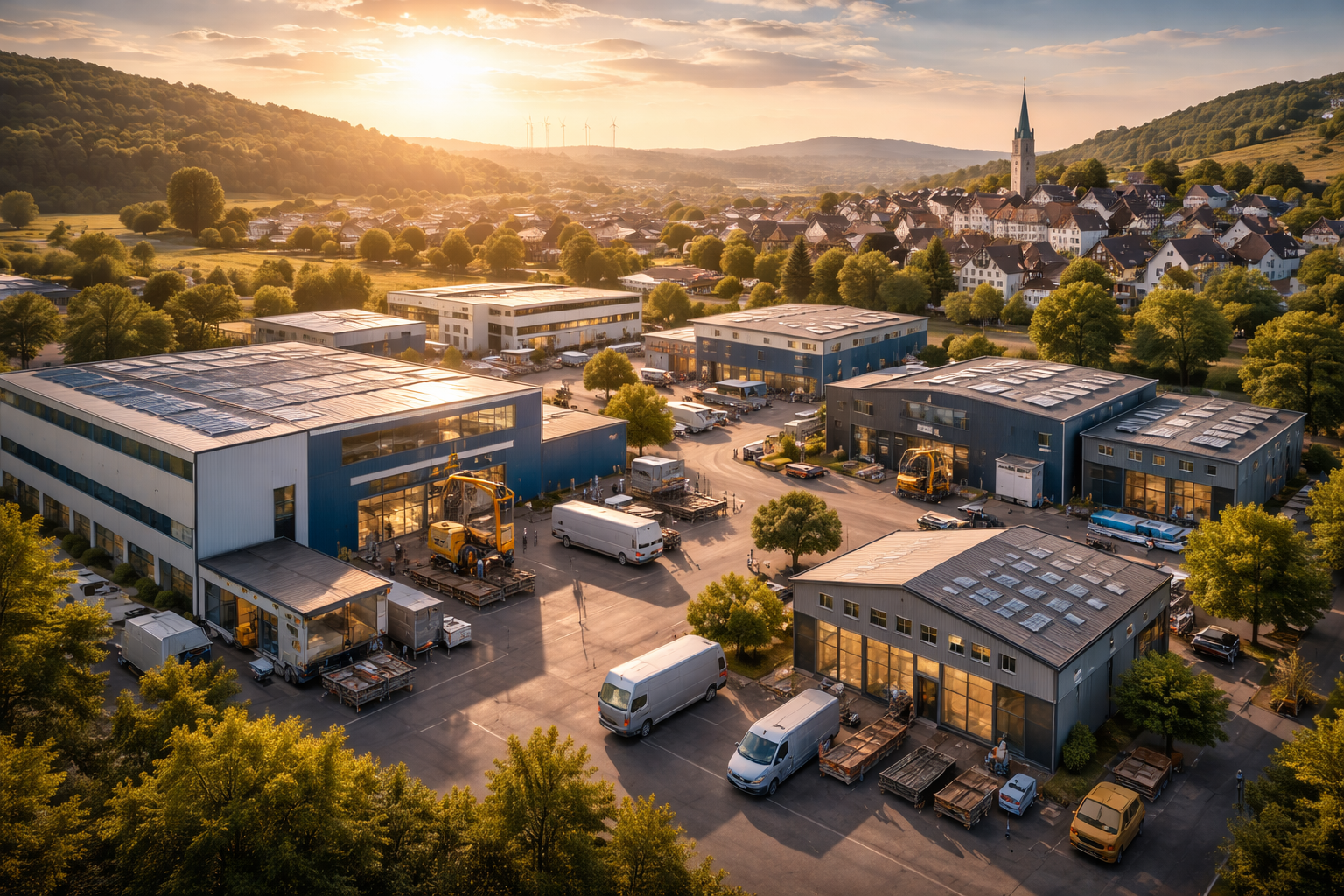
Thousands of medium-sized, family-owned companies that dominate niche industries worldwide.
Many international candidates underestimate the Mittelstand because these firms are not always “famous brands”. Yet they form the backbone of Germany’s export strength and employ large numbers of engineers, technicians, skilled trades, commercial staff, and operations talent across the country.
Unlike public corporations driven by quarterly results, Mittelstand companies plan in generations. They invest heavily in training, process excellence, and retention. The work culture is often structured and quality-driven: clear responsibilities, strong apprenticeship pipelines, and long-term career progression for people who demonstrate reliability and craft.
Niche Leaders
Highly specialised global market leaders operating in specific sectors like optics, machinery, or chemicals.
Rooted Locally
Operate globally but integrated locally, offering stability in smaller towns and cities.
Family Owned
Management often overlaps with ownership, leading to faster decisions and personal responsibility.
Innovation
High R&D spending per employee ensures they stay ahead of global competition.
What they look for
Clear role fit, stable career history, and the ability to work reliably in structured teams.
How they hire
Fewer “fluff” rounds, more emphasis on documentation, references, and practical competence.
How to stand out
German-ready CV, relevant certifications, and visible language progress (B1/B2/C1).
Where Demand Comes From
The green, digital, and demographic transitions reshaping demand across skills and regions.
Germany is undergoing a major transformation driven by sustainability and digitalisation. This is not a “future trend”; it is already reshaping budgets, projects, and hiring plans across manufacturing, mobility, energy, healthcare, and IT infrastructure.
Demand rises where multiple transitions intersect: companies modernising factories (automation + data), electrifying fleets (hardware + software), and scaling digital infrastructure (cloud + cybersecurity). Candidates who combine a core technical skill with adjacent capabilities—such as mechanical + PLC, electrical + automation, or nursing + language readiness—become disproportionately employable.
Roles in High Demand
The gap is not limited to IT. Germany’s transition economy needs technical and care-based skills in parallel.
- Software Developers (Java, C++, Python)
- Electrical & Mechatronics Engineers
- Data Scientists & AI Specialists
- Nursing & Healthcare Professionals
- Skilled Trades (Craftspeople)
- Technicians for data centers & critical facilities
- Cybersecurity & network operations
Advanced Manufacturing
Automation, robotics, and smart factories driving demand for engineers and IT specialists.
Automotive & Mobility
Transition to e-mobility requiring new skills in battery systems, software, and AI.
IT & Infrastructure
Data centers, cloud platforms, and critical digital infrastructure scaling rapidly.
Healthcare & Nursing
Ageing demographics and system-wide shortages driving sustained demand in care roles.
Opportunities Beyond One Capital City
Why location strategy matters as much as qualifications in Germany.
Germany’s opportunity is distributed. Each region has its own industry mix, salary ranges, and housing realities. If you match your profile to the right cluster, your probability of getting an interview increases materially.
Because Germany is federal, economic strength is not concentrated in a single capital city. Large employers and “hidden champions” are spread across states (Bundesländer). A strong location strategy, based on your occupation, language level, and cost-of-living tolerance, often outperforms applying only to the most popular cities.
Decentralised Power
Germany’s economic power is spread across the country. You don’t have to live in Berlin to build a career. Many global market leaders are hidden in smaller towns and regional clusters.
Cost of Living
Choosing a regional hub often means higher disposable income. Rents in Munich or Berlin are significantly higher than in cities like Leipzig or across the Ruhr area.
Munich & South
- Automotive & Mobility
- Insurance & Finance
- High-Tech Engineering
Frankfurt
- Banking & Fintech
- Logistics & Aviation
- Data Centers
Capital Region
- Startups & GovTech
- Creative Industries
- Services & Tourism
Hamburg
- Logistics & Trade
- Renewable Energy
- Aviation (Airbus)
Ruhr Area
- Industrial Tech
- Energy & Chemicals
- Healthcare
System Design
Germany’s education and training model is designed to convert learning into employability.
This matters because Germany hires for defined roles. The closer your education and training are to the job’s requirements, the faster you progress, from entry to stable employment.
Applied Research
Universities collaborate directly with employers on real-world projects, often via labs, industry chairs, and funded research.
Dual Training
The ‘Ausbildung’ system combines structured classroom learning with paid work experience, producing role-ready professionals.
Action Checklist
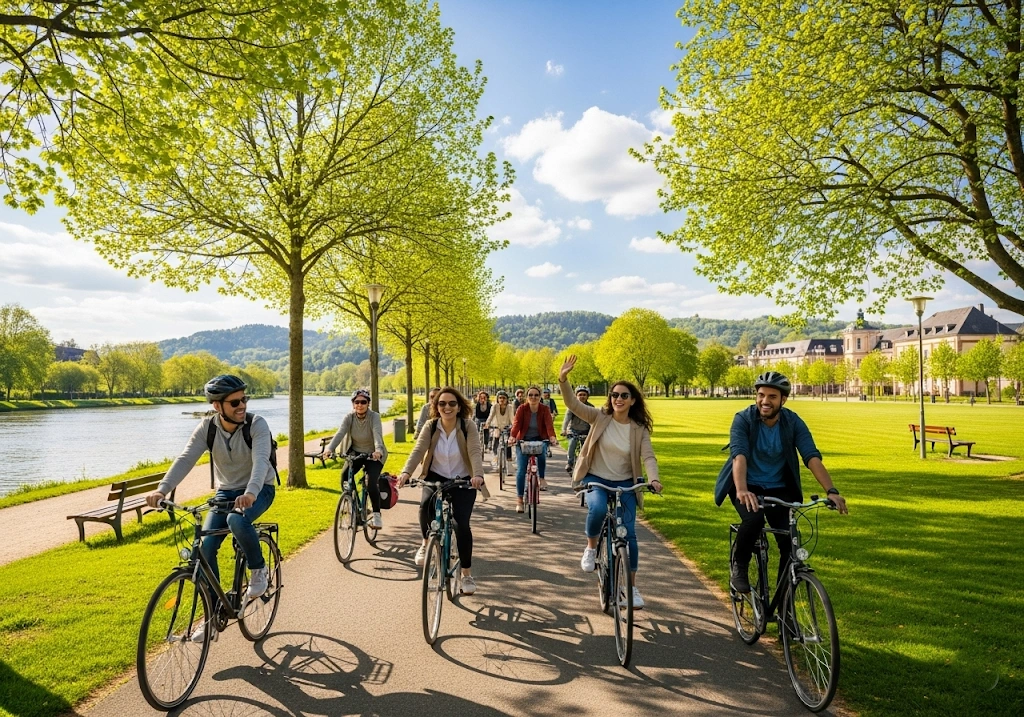
Beyond Jobs: Stability & Dignity
How taxes, protections, and social systems shape everyday life.
Germany offers one of the world’s strongest social security systems. Taxes fund a predictable, high-quality life: regulated work hours, paid leave, healthcare access, and strong protections for employees.
For international families, the key difference is stability. Systems are rule-based: what you contribute through employment and insurance translates into tangible benefits, from healthcare coverage to pension contributions and unemployment protections.
- Universal healthcare
- Pension insurance
- Unemployment safety net
- Strong worker rights
Your Strategy
Choosing the entry route that aligns with your skills, goals, and timeline.
Study
Bachelors, Masters, PhD
- High eligibility requirements
- Blocked account needed
- Excellent long-term prospects
Best for: candidates who can invest 12–24 months in education and want maximum long-term mobility. Not ideal if: you need a rapid job outcome without academic eligibility.
Ausbildung
Earn & Learn Model
- Learn by doing in companies
- Earn a salary while learning
- Requires German (B1/B2)
Best for: hands-on candidates who want a paid, structured “earn & learn” route into German industry. Not ideal if: you are unwilling to reach B1/B2 German before start.
Work
Blue Card & Opportunity Card
- Recognized degree required
- Job offer usually needed
- Points-based system available
Best for: qualified professionals with recognised education and strong role-fit for Germany’s demand. Not ideal if: your profile lacks documentation or you have no clarity on target roles.