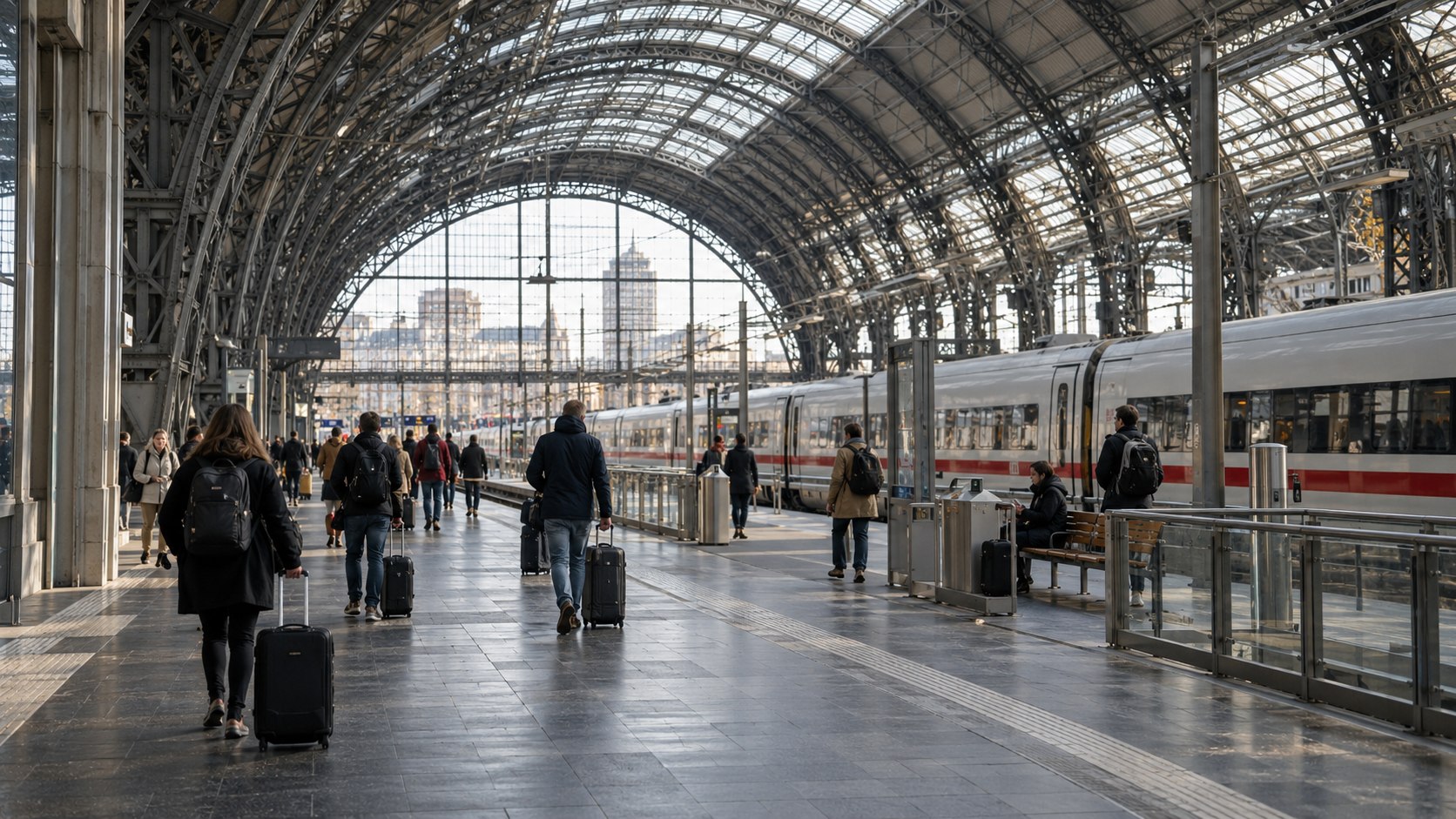
Buying a drink at a station kiosk and carrying it towards the platform used to feel routine in many parts of Germany. That changed nationwide on 15 October 2026. Deutsche Bahn (DB) extended its alcohol consumption ban to all roughly 5,700 DB stations, including platforms and station halls where its station rules apply. The company announced the completed rollout on 14 October. [1]
The restriction is easy to misunderstand. It is about consuming alcohol in covered station areas, not automatically about possessing a sealed bottle, buying a drink or drinking aboard every German train.
What exactly is prohibited?
DB's station rules prohibit drinking alcohol in covered public station areas such as platforms and concourses. The rule forms part of DB's Hausrecht: its right to set conduct rules on its premises. It can apply whether the drink was purchased at the station kiosk or brought from outside.
For a traveller, the safest interpretation is simple: do not open or consume an alcoholic drink while standing on a DB platform or in a station hall. Signs on the premises identify the rule.
Does the ban cover every German railway station?
DB says its 15 October measure covers approximately 5,700 stations: about 5,400 managed by DB InfraGO plus around 300 DB RegioNetz stations. This explains why early reports mentioned 5,400 but the completion announcement stated 5,700. [1]
There can be questions about privately owned premises or facilities managed by other operators, so always follow the displayed house rules in the place you are visiting.
Can you carry a sealed beer bottle in your bag?
Yes. DB specifically states that passengers may continue to carry closed alcoholic drinks in their luggage or shopping bags. A sealed bottle inside your backpack is not the same as drinking it on a platform. [1]
You do not need to discard a newly purchased bottle merely because you are passing through a station, keep it closed while in the covered areas.
What about bars and restaurants inside stations?
Authorised gastronomy is generally exempt from the station consumption ban. A passenger may be able to drink in a station restaurant or bar according to that business's rules. This does not give permission to take an open drink out onto the platform.
The distinction is between a licensed/authorised venue and the surrounding public station space.
Is alcohol banned on German trains?
The DB station rule does not automatically impose an equivalent blanket ban across all train services. Long distance trains may still sell alcoholic beverages in onboard catering. However, individual operators, services or routes may have their own restrictions.
Always check the train operator's conditions, especially on local services or during events. Do not assume what is allowed in a long distance onboard bistro is permitted on a regional platform.
Why did Deutsche Bahn introduce this rule?
DB says the objective is to improve safety and cleanliness for passengers and employees and reduce conflict in station areas. Before the nationwide rollout, several major stations already had restrictions, and DB pointed to positive experience at those locations. [1]
A conduct rule is not the same as a criminal law prohibition. Station security staff use the operator's rules and house rights to address violations. DB says repeated violations can lead to a Hausverbot, an exclusion from the premises. Other legal consequences may apply if separate laws are broken.
What if you accidentally start drinking on the platform?
Respond calmly if station staff ask you to stop. Put the drink away or dispose of it appropriately, and follow legitimate directions. Do not argue that the kiosk sold you the beer; selling a sealed drink and consuming it on the platform are different activities.
Newcomers who do not speak German well should recognise these signs:
- Alkoholkonsum verboten, alcohol consumption prohibited;
- Hausordnung, house rules;
- Hausverbot, exclusion from the premises;
- Bahnhofshalle, station concourse/hall;
- Bahnsteig, platform.
Does this change German drinking culture?
Germany is often associated with beer gardens, public festivals and comparatively relaxed attitudes to outdoor drinking. But public drinking has never been unrestricted in every context. Operators and municipalities can regulate conduct in specific places, and different transport providers have their own rules.
The station ban is a useful reminder that what is generally tolerated outdoors may not be permitted on transport premises.
Frequently asked questions
Can I drink beer on a platform in Germany?
At DB stations subject to the October 2026 rule, no. The ban covers consumption in the relevant station areas.
Can I buy beer at a train station?
The measure does not create a general ban on sales. Buying a closed drink is different from drinking it on the platform.
Can I carry alcohol onto a train?
DB expressly allows closed drinks to be carried through stations. Onboard consumption depends on the train operator's rules.
Can I drink in a station restaurant?
Authorised station gastronomy is generally exempt within the venue.
Is the ban new everywhere?
No. Some individual stations had alcohol consumption restrictions before the nationwide October 2026 rollout.
WhyGermany takeaway
The new rule is straightforward once the distinction is clear: carrying a sealed drink is not the same as consuming one. From 15 October 2026, the DB station network applies the consumption ban broadly. Check the signs, keep drinks closed on platforms and follow venue specific rules.
Sources
- Deutsche Bahn, 14 October 2026: Nationwide station alcohol consumption ban
- tagesschau, 15 October 2026: How the ban works
Last fact checked: 17 October 2026.