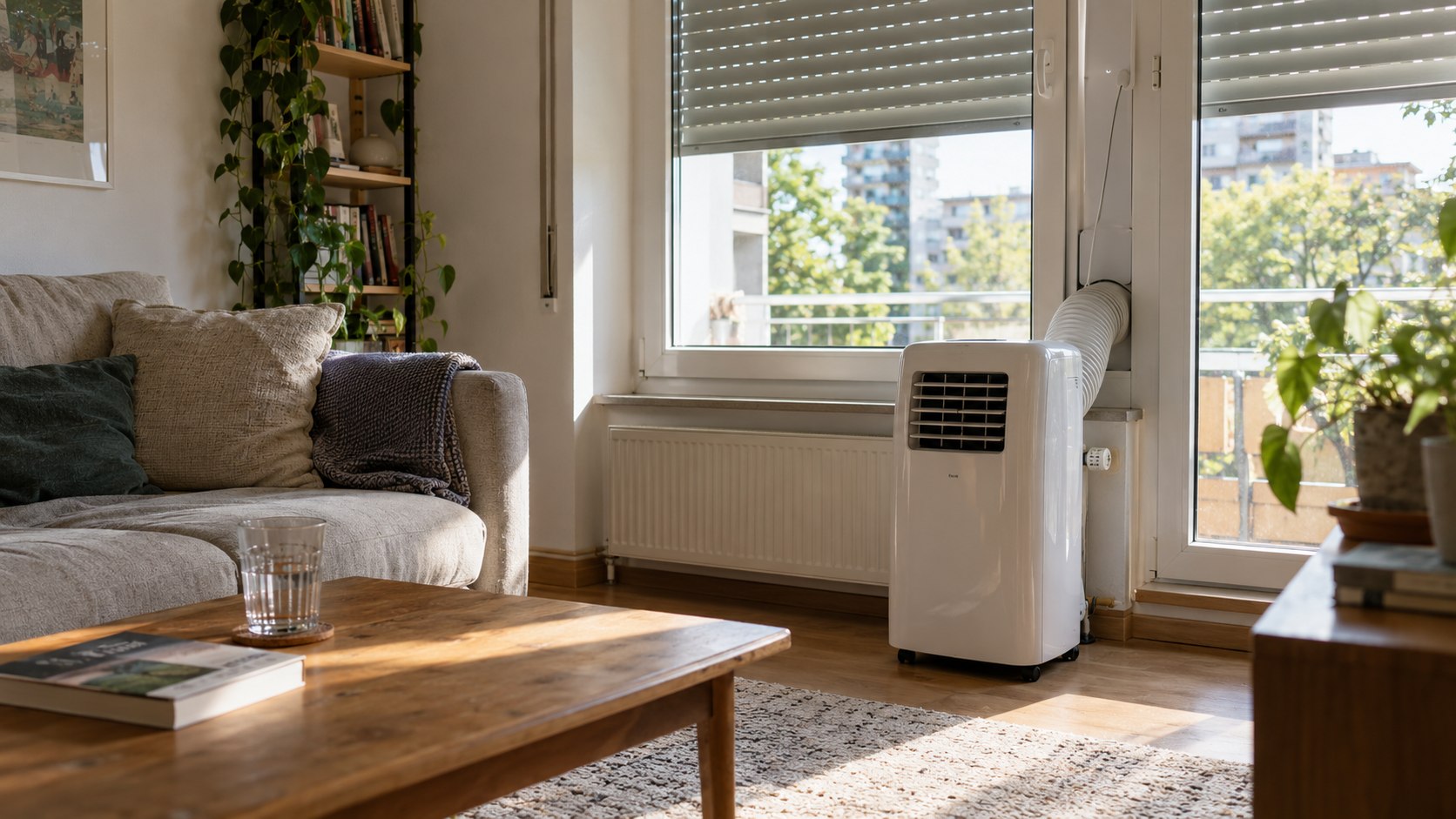
A new arrival in Germany may be surprised to discover that a modern looking apartment, university dormitory or office has no air conditioning. German buildings have historically relied more heavily on passive cooling, shading, ventilation and seasonal weather patterns than on wall to wall mechanical cooling. But hot summers can make upper floor rooms particularly uncomfortable.
In August 2026, Germany's Federal Justice Minister proposed making it easier for tenants to install air conditioning equipment or external shading such as blinds. The crucial point: the proposal was not, at that stage, a new nationwide right to install fixed AC without the landlord's consent. [1][2]
Why is AC not standard in many German homes?
Many buildings were designed for cooler historical conditions. Older housing stock, energy efficiency considerations, building structures and the cost of installing and running AC all play a role. A room may have central heating but no cooling system.
This does not mean Germany never gets hot. Federal environmental guidance recognises increasing hot days and tropical nights, particularly in densely built cities. [3]
Portable fans versus fixed air conditioning
A portable fan usually moves air rather than cooling the room itself. It can improve personal comfort but cannot remove the heat from an overheated apartment.
A portable air conditioning unit actively cools air, often through an exhaust hose vented via a window. It may consume substantial electricity and can be noisy. Check the building's rules and how the hose will be safely installed.
A split AC system usually involves an indoor unit connected to an outdoor condenser. Installation can require drilling, facade work, electrical changes and noise considerations. That typically affects the building and is not equivalent to placing a fan on the floor.
External blinds and sunshades may also change the building's exterior, which is legally significant in a rented apartment.
Do tenants have a right to install fixed AC?
As described in reporting on the minister's 19 August 2026 statement, tenants did not generally have an unconditional statutory right to install permanent AC or outside shading devices. Structural alterations usually require the landlord's agreement. [1][2]
The minister expressed support for practical changes that would make heat protection easier for tenants while balancing landlords' interests. A ministerial statement about a possible law is not the same as an enacted amendment. Before buying equipment that requires installation, confirm the current legal position and obtain any necessary written approval.
What did the August proposal seek to address?
The discussion concerned obstacles to tenant installed heat protection, such as the legal and practical difficulty of modifying a rented building. Clearer rules could help residents respond to hotter summers, especially where passive measures are insufficient.
However, specific future rights, cost allocation and conditions would depend on legislation actually passed. It would be misleading to tell tenants that landlords must now automatically approve every AC unit or external shutter.
What can you do without modifying the building?
Germany's Federal Environment Agency recommends several measures:
- Ventilate at night and early morning when outdoor air is cooler.
- Shade rooms exposed to direct sunlight; external shading can be particularly effective where available.
- Reduce avoidable indoor heat from appliances and lighting.
- Schedule demanding physical activity for cooler hours.
- Watch for heat risks affecting children, older people and those with medical conditions. [3]
Consumer centre guidance also notes that upper floor and roof level apartments can become very hot and encourages preventive shading and sensible ventilation. [4]
Always consider whether opening windows at night is safe in your particular building and neighbourhood.
Important difference: cooling and ventilation
Germany also places great emphasis on avoiding mould (Schimmel). Ventilation is important for indoor humidity, but indiscriminately opening windows during the hottest part of the day can allow additional heat inside. The right timing depends on outdoor temperature, indoor humidity and weather.
Moisture from showers, cooking and drying clothes should be managed. The Federal Environment Ministry explains that proper ventilation and heating help reduce mould risk. [5]
Questions to ask before renting
Before accepting a top floor, south facing or heavily glazed apartment, ask:
- Is there existing Außenbeschattung (external shading)?
- Can windows be opened for cross ventilation?
- Does the top floor or roof space become exceptionally hot?
- Are blinds, shutters or curtains already installed?
- Is a fan permitted and are adequate power sockets available?
- Is any portable AC equipment permitted?
- Would the landlord consider written approval for a fixed installation?
- Are there building or homeowners association restrictions?
A pleasant February viewing does not reveal what the same room feels like during a July heatwave.
Frequently asked questions
Do most German apartments have AC?
Many do not. Equipment varies considerably by building type, age, region and property.
Can a tenant install a split AC unit without asking?
Usually, structural installation requires prior consent. Obtain written approval and confirm applicable building rules.
Did Germany change the AC installation law in August 2026?
The August news concerned a proposal for legal changes, not an unconditional new tenant right taking effect that day.
Do blackout curtains replace AC?
They can reduce solar heat gain but do not actively cool indoor air. Their effectiveness depends on window orientation and building characteristics.
WhyGermany takeaway
Before signing a rental contract, assess summer comfort as carefully as winter heating. And if you want fixed AC or exterior shading, check the legal position and seek written consent where required. Germany's August 2026 debate recognised a real heat protection challenge, but it should never be presented as permission to make structural changes without approval.
Sources
- tagesschau, 19 August 2026: Proposed legal changes for AC in rentals
- Deutschlandfunk, 19 August 2026: Tenant heat protection proposal
- Federal Environment Agency, 3 August 2026: Summer heat tips
- Verbraucherzentrale: Keeping an apartment cool
- Federal Environment Ministry: Correct ventilation and heating
Last fact checked: 17 October 2026.